GEO
Blog

Latest news and updates

Las Catedrales: Cliffs in Transformation

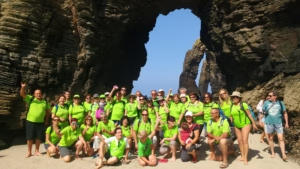
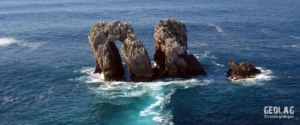
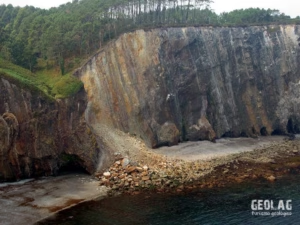
As Catedrais Beach, in Ribadeo, is much more than one of Galicia’s most visited landscapes. Its slate and schist cliffs, shaped by waves and tides, provide a live demonstration of how geology transforms the coastline. Arches, columns, fractures, and landslides turn this protected enclave into a window into our planet’s past and a natural laboratory for understanding coastal processes.
Learn more »

The Asturian coast: its beaches and cliffs

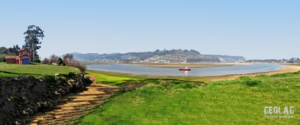
The Asturian coast is a living landscape where beaches, cliffs, dunes, estuaries, and coastal platforms (rasas) tell the geological history of the northern Iberian Peninsula. Along its more than 350 km of coastline, between the Tinamayor and Eo estuaries, the variety of rocks and structures dictates the shape of the coast: from the cliffs and pebble beaches of the west to the limestone landscapes of the east, including the large sandy areas and dune systems fed by rivers. An educational journey to understand how the sea, rocks, sediments, and time have modeled one of the most diverse coastlines of the Cantabrian Sea.

Learn more »

The Dinosaur Coast (and other fossils…)

The Asturian Dinosaur Coast offers a fascinating journey along the Jurassic cliffs of Caravia, Colunga, and Villaviciosa, where footprints, bone remains, and marine fossils from millions of years ago are preserved. This driving route explores sites such as Vega Beach, the Jurassic Museum of Asturias, La Griega Beach, Rodiles, Misiego Cove, and Tazones, combining geology, coastal landscape, natural heritage, and small, accessible stops for all audiences. An ideal tour to discover how the sea, tides, and Earth’s history continue to reveal the footsteps of the ancient inhabitants of the Jurassic period.

Learn more »