

This route aims to explore the main outcrops of dinosaur footprints and remains along the Asturian Jurassic coast, and our route will take us through the municipalities of Caravia, Colunga, and Villaviciosa.
The main tour will be by car, stopping at Vega Beach, La Griega Beach, the Jurassic Museum, Rodiles Beach, and Misiego Beach, where we can take a stroll along Misiego Cove (accessible for people with disabilities), ending in the fishing village of Tazones. All dinosaur footprint sites are considered Natural Monuments (MN) within the Network of Protected Areas of the Principality of Asturias.
So far, nearly 500 footprints and various bone remains of Jurassic reptiles have been counted between Gijón and Ribadesella, and it is expected that the action of the waves on the cliff will continue to uncover new remains in the future.
Asturias boasts the largest dinosaur footprints in the world, as well as the smallest footprint, corresponding to a juvenile quadrupedal dinosaur approximately the size of a modern dog. In this privileged part of the peninsular coast, remains of turtles, crocodiles, marine reptiles, fish, and countless other traces have also been found. As this is a coastal route, we will have to adapt our itinerary to the tides. To visit the dinosaur outcrops, the tide must be low, as the lower part of the cliff is covered by water, making access impossible.
Vega Beach and Entrepeñas Gorge. Natural Monument
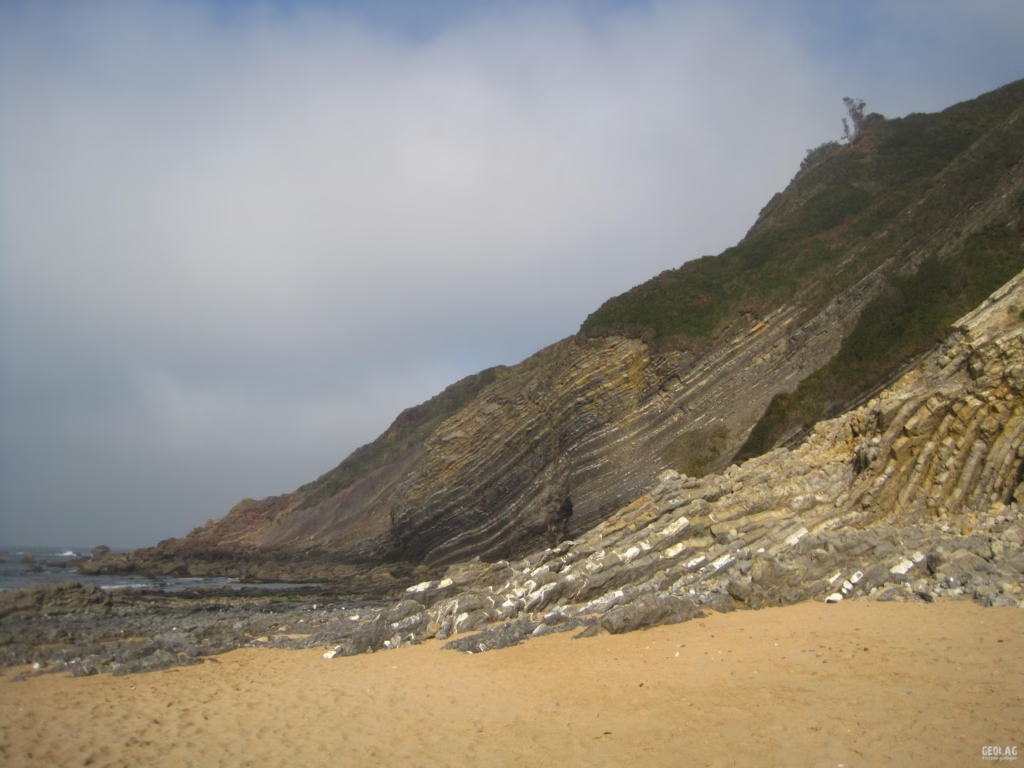
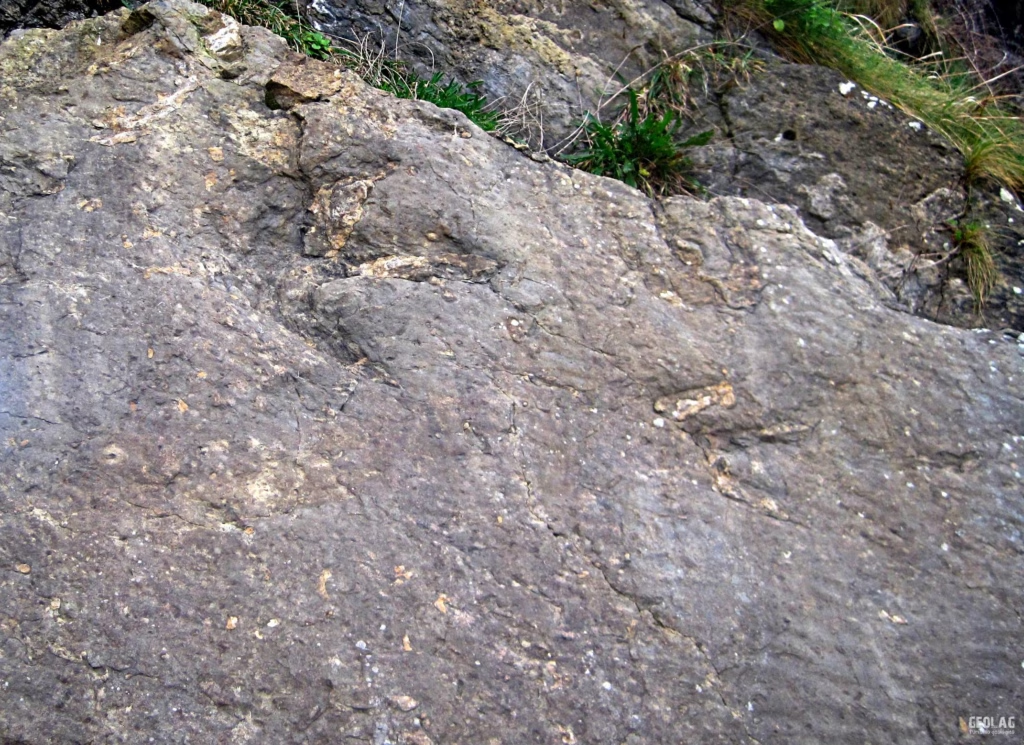
We begin in the municipality of Caravia, visiting Vega Beach, a Natural Monument (MN) within the area. To reach this beach, we will pass through the Entrepeñas Gorge, also included within the MN. This curious gorge cuts through Ordovician-age Barrios quartzites (approximately 450 million years old). Upon arriving at the beach, we will head east, towards the Jurassic-age cliffs (approximately 150 million years old) on our right, where we can observe marine shell remains at low tide. Further along, a sign indicates the location where two tridactyl dinosaur footprints can be seen. This change in fossil types reflects the transformations undergone by the Asturian coast during the Jurassic period. Initially, these lands were submerged, which is why we find marine fossils. Throughout the Jurassic, the continent rose due to tectonic changes, and the sea receded, giving way to a muddy terrestrial area where dinosaurs left their footprints. After the footprints formed, the tectonic activity linked to the Alpine Orogeny was responsible for the rocks not being in a horizontal position, as they were deposited, but appearing in inclined, sometimes almost vertical, layers. We therefore rule out that these large dinosaurs practiced climbing ;).
Jurassic Museum and La Griega Beach
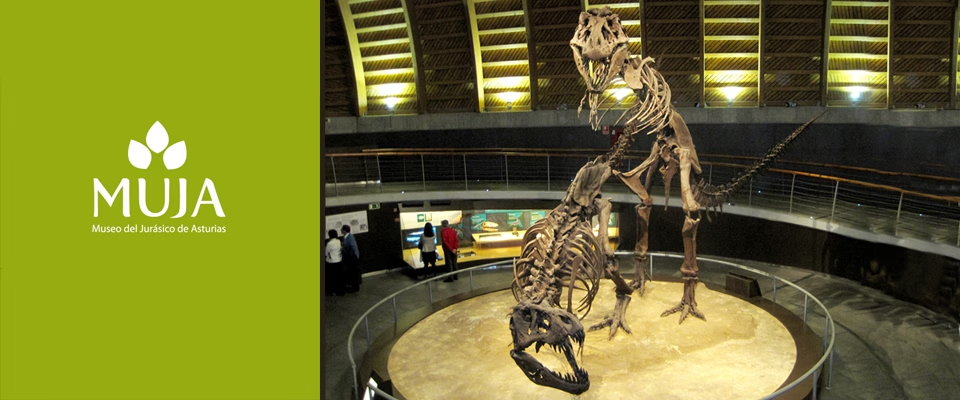
From Vega, we head towards Colunga, where we can visit the Jurassic Museum, which exhibits many of the dinosaur remains and other organisms that lived during the Jurassic period. The MUJA displays many of the remains found in Jurassic terrains, with a collection of over 8,000 pieces extracted from nearby cliffs. Near the museum, at La Griega Beach, we can visit the site with the world’s largest sauropod (herbivorous dinosaur) footprints. If the tide is high, a walkway across the river will lead us easily to the upper part of the cliff to see these footprints. The most complete skeleton from the Spanish Jurassic record was found on this beach, a crocodile specimen just over a meter long.
Villaviciosa Estuary
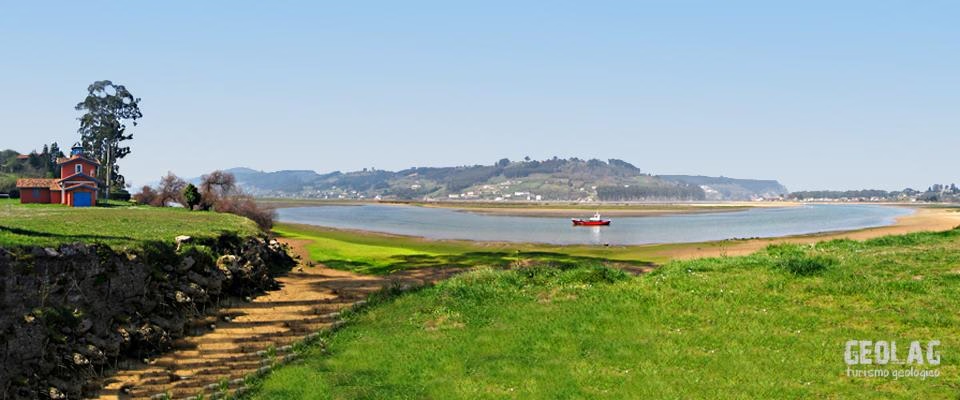
From Colunga, we head towards Villaviciosa, and then to Rodiles Beach, where we can once again see marine fossils consisting of various types of shells, notably ammonites (organisms with coiled shells) and belemnites (bullet-shaped fossils). From there, we will go to Misiego Cove, where a wooden platform has been installed to facilitate walks for people with disabilities and strollers. This is a short, flat walk of about 500 m (round trip). On this walk, we can discover the strong influence of humans on the modification and evolution of estuarine environments. Thus, on both sides of the walkway, we will see how the landscape changes. Towards the main channel of the estuary, we see a muddy plain where marsh vegetation proliferates, while on the other side of the walkway, we see meadows and pastures. This is due to the significant desiccation imposed by the dike we are walking on. These types of lands reclaimed from the sea are called “porreos” and are similar to the polders known from Holland.
Tazones and jet
After lunch, and if we still want to learn more about the Dinosaur Coast, we can visit Tazones, but not before passing through the Villaviciosa Estuary Interpretation Center. At this center, we will discover that it is a habitat and regular migratory route for many bird species. This estuary is one of the most important on our coast and is a Site of Community Importance (SCI) and a Special Protection Area for Birds (SPA), both European-level protection designations. Tazones is one of the most charming villages on the Asturian coast. Although it is now an eminently tourist town, it still retains the appeal of traditional fishing villages. On the beach, we can also see dinosaur footprints, always at low tide and being careful not to slip on the stones!!! It is worth mentioning that in the nearby town of Oles, there are still jet artisans. Jet is a variety of coal highly prized in jewelry and found in Jurassic rocks. It is formed from plant remains of that era. In Oles, the spoil heaps of an old jet mine are preserved. Asturian jet is considered one of the best quality in the world, along with that from Whitby (England). We end our day with a beer on one of Tazones’ terraces, which are very lively during the summer.
Would you like to discover this landscape with a geologist?
GEOLAG organizes educational routes adapted to families, groups and educational centers.
Request information about this route