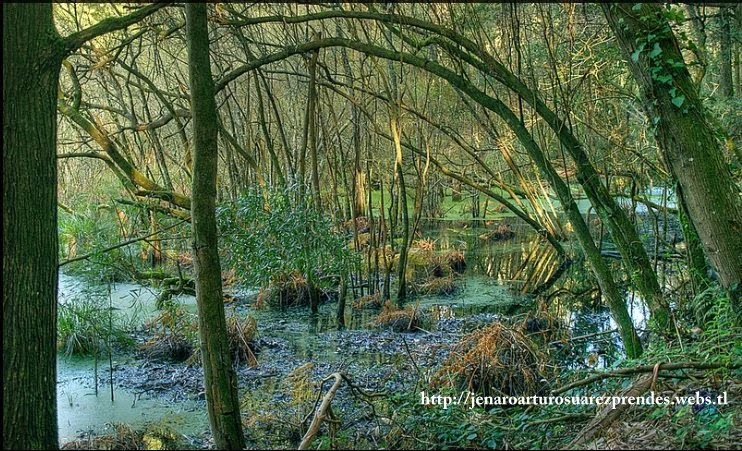


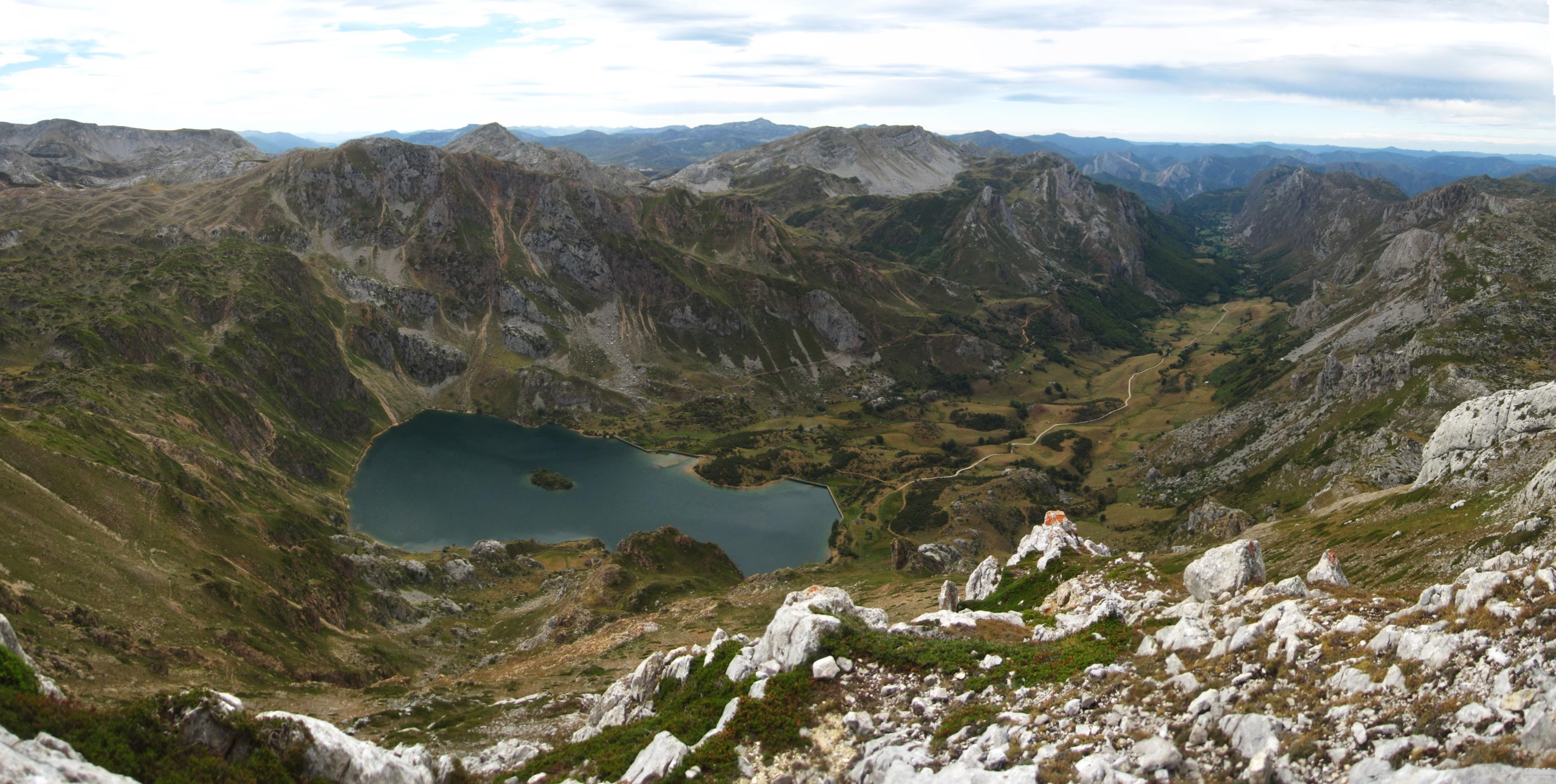
Although Somiedo was the first area in Asturias to be declared a Natural Park in 1988 and, in 2000, it was also included in the Natura 2000 Network as a Biosphere Reserve, Somiedo has managed to preserve its natural and ethnographic values and is a clear example of sustainable development. The Park includes 38 population centres with around 1,600 inhabitants, organised mainly into four main valleys: Saliencia, Valle, Somiedo and Pigüeña.
Somiedo’s main economic activity has been, and continues to be, extensive beef livestock farming. However, the declaration as a Natural Park has led to a notable increase in the tertiary sector related to visitor services and greater tourist influence.
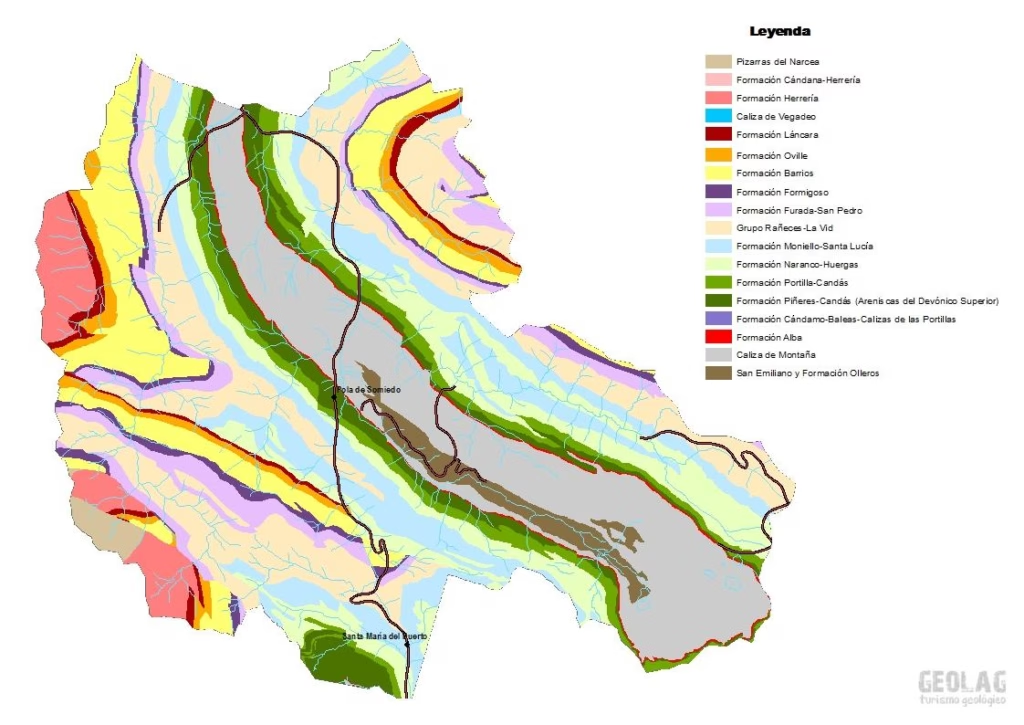
Its varied geological substrate is one of the main characteristics that directly influence its great natural diversity, and the areas formed by Ordovician quartzites and Carboniferous limestones make up the highest zones and the main ridgelines. In turn, the areas that coincide with a lutite or sandstone substrate form the main valleys.
The rocks that make up Somiedo Natural Park form a powerful sequence more than 6,000 m thick that was bent and folded during the Hercynian and Alpine orogenies, resulting in an almost vertical arrangement of the strata. After the compression suffered by the crust, the rocks of Somiedo were folded into a large synclinal fold whose axis roughly coincides with the town of Pola de Somiedo. Some of the limestone ridges display faults and folds that reveal the Earth’s internal forces.
Through the fractures opened during deformation of the crust, mineral-laden fluids entered, giving rise to the cinnabar deposits of Caunedo and the iron deposits at Lago de la Cueva. There are also indications of other minerals such as mercury, arsenic, lead, zinc, copper, barite, kaolin, and even coal.
After the action of tectonic processes, glaciers, rivers and karst processes were responsible for putting the finishing touches on the Somiedo landscape. Somiedo’s lakes are the result of its glacial past, and the Saliencia valley and the Valle del Lago have been carved by two major glacier tongues that, around the lakes, left polished surfaces and roches moutonnées as evidence of their passage. The Pigüena River has carved a deep valley that serves as a link with Asturias. Along its slopes, numerous examples of very active hillslope dynamics can be observed: in areas with a lutite and sandstone substrate, in the form of large mass movements and shallow landslides, and in limestone areas, as large rock avalanches.
Would you like to discover this landscape with a geologist?
GEOLAG organises educational routes adapted for families, groups and schools.
Request information about this route