

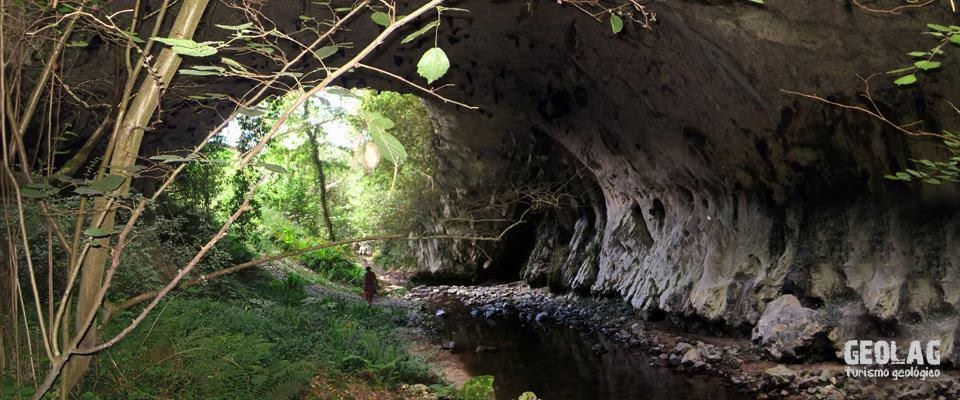
Very close to Vega beach is the town of Torre, where we can see another whim of nature: El Puente del Arcu, formed by the erosive power of the Acebo River over thousands of years. From the Vega junction towards Ribadesella, drive a few meters until you reach the village, where you take a right turn indicating Llinares and Collia. Immediately cross a bridge and then take the road that branches off to the right, which will lead us to a wider area where we can park the car.
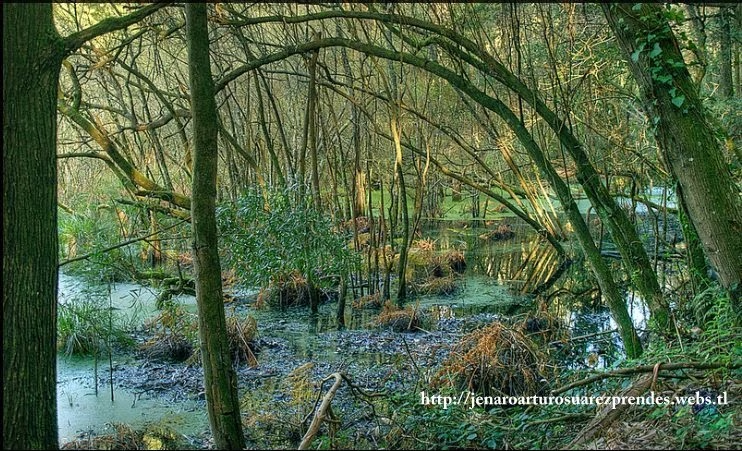
A pleasant walk through the forest will bring us closer to the arch. We will be guided by the annoying noise of the Ana Mine, very close to the arch and which will be our reference. Without realizing it, we will pass over the arch. It is a beautiful place, only disturbed by the continuous noise of the Ana mine (fluorspar washing plant), where there is intense truck traffic. In fact, the arch is located right on the edge of the facilities, where a sign warns “Entry to facilities prohibited.”
Initially, the river formed a cave to overcome a more resistant level of the Carboniferous limestones in its path, so the river flowed underground throughout this sector. At that time, stalactites and flag formations were created, which are still preserved on the walls of the current arch. Over time, the river eroded the cave, and successive collapses of its ends eventually formed this perfect arch, over which we will have to pass to access its lower part. Just below it, the ruins of an old flour mill are preserved, now completely covered by the exuberant vegetation growing in the area.
Undoubtedly a special place worth discovering.
Do you want to discover this landscape with a geologist?
GEOLAG organizes educational routes adapted for families, groups, and educational centers.
Request information about this route