

Although the existence of coal in Asturias had been known since ancient times (In 1591, Fray Agustín Montero discovered a black rock on the cliffs of Arnao and wrote to King Philip II to obtain permission to mine it), it was not until the 19th century that the systematic mining of this mineral began. The need to facilitate and reduce the cost of transporting the ore led to the construction of the first railroads in Asturias. According to records, Spain’s first railroad was built in 1834 in connection with the Arnao Mine, although it was powered by animal traction. Spain’s first industrial railroad linked the mines of Langreo and Siero with Gijón. It was built between 1852 and 1856 and was the fourth steam-powered line on the Iberian Peninsula. This new transportation system quickly replaced the coal road that had connected La Felguera with Gijón since 1842.
The arrival of the railroad in Asturias would mark a major change in Asturian society and economy and lead to a significant increase in coal production and exports.
The María Luisa Well
It is one of the most iconic and well-known coal mines in Asturias and is located in the municipality of Langreo. I’m sure you’re all familiar with the sad traditional song “En el pozo María Luisa,” also known as “Santa Barbara Bendita.”
Upon reaching the mine entrance, we came across the office buildings and workshops, built in 1920 of red brick in the industrial style of the era. Also noteworthy are the loading shed and two mine towers, although one of them underwent a recent renovation that changed its appearance. The housing for the mine workers was built in the La Nozaleda neighborhood.
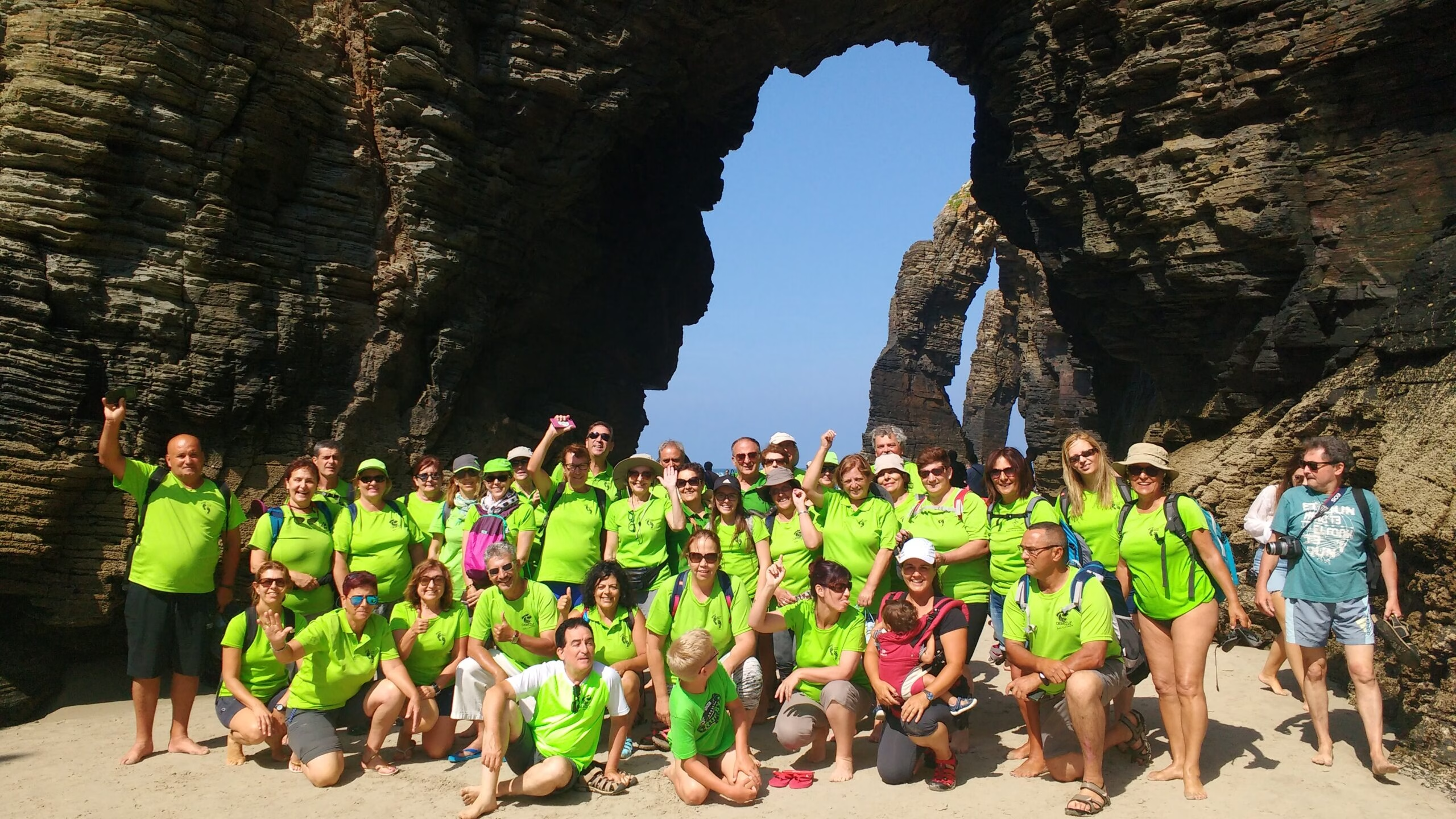
Mining at the site began in 1858, and the shaft was deepened in 1918, but it was not until after the Civil War that the mine reached full capacity. In the 1940s, a firedamp explosion claimed the lives of 16 miners. In 1976, the King and Queen of Spain visited the mine, descending into the shaft dressed as miners—just as we conference participants did (here’s the photo!). After putting on our suits, boots, and even miners’ underwear, we strapped on our self-rescue devices and helmets with built-in lights. The mine cage took us down to Gallery 10, located more than 500 m below the surface; below that lies another gallery connected by a steep ramp. We were able to experience firsthand the harsh working conditions inside the mine. Temperatures above 40°C, poor, stale air, dim lighting, and high noise levels. One unforgettable image is that of miners completely covered in sweat and soot, making their way through the labyrinth of tunnels.

Mining Heritage in Asturias
In 2011, the European Union decided to close all unprofitable mines by 2018. Will this spell the end of mining in Asturias?
Without going into detail about the socioeconomic impact that the closure of the Asturian mines would have, I prefer to focus on exploring the mining heritage that the mining industry, since its beginnings more than a century and a half ago, has left us as a legacy.
In 2001, a Law of the Principality of Asturias on Cultural Heritage came into effect, which recognizes industrial and documentary heritage as a new category of cultural assets and establishes regulations for their preservation. Since then, the Cultural Heritage Inventory of Asturias (IPCA) has been incorporating various industrial heritage sites, such as the Arnao mining and industrial complex, the Llumeres mines, the San Luis Mine in Langreo, and the San Claudio pottery factory, among others. In 2010, the Cultural Heritage Council of the Autonomous Community of Asturias added 55 elements of Hunosa’s Mining Heritage to this inventory, which serve as testaments to the industrialization of mining in the region’s central area. This inventory will encompass the industrial legacy of coal mining, as well as residential, social, and technical heritage that has shaped the Asturian territory and holds historical and symbolic value for all of Spain.
The Origins of Life in Europe
Arnao Beach is a geological reserve of immense richness. The cliffs are home to Europe’s most important Devonian fossil site. It is a massive reef containing a wide variety of organisms, such as various types of corals, bryozoans, echinoderms, and more. The rocks bear the imprints of the animals and plants that thrived here 415 million years ago.
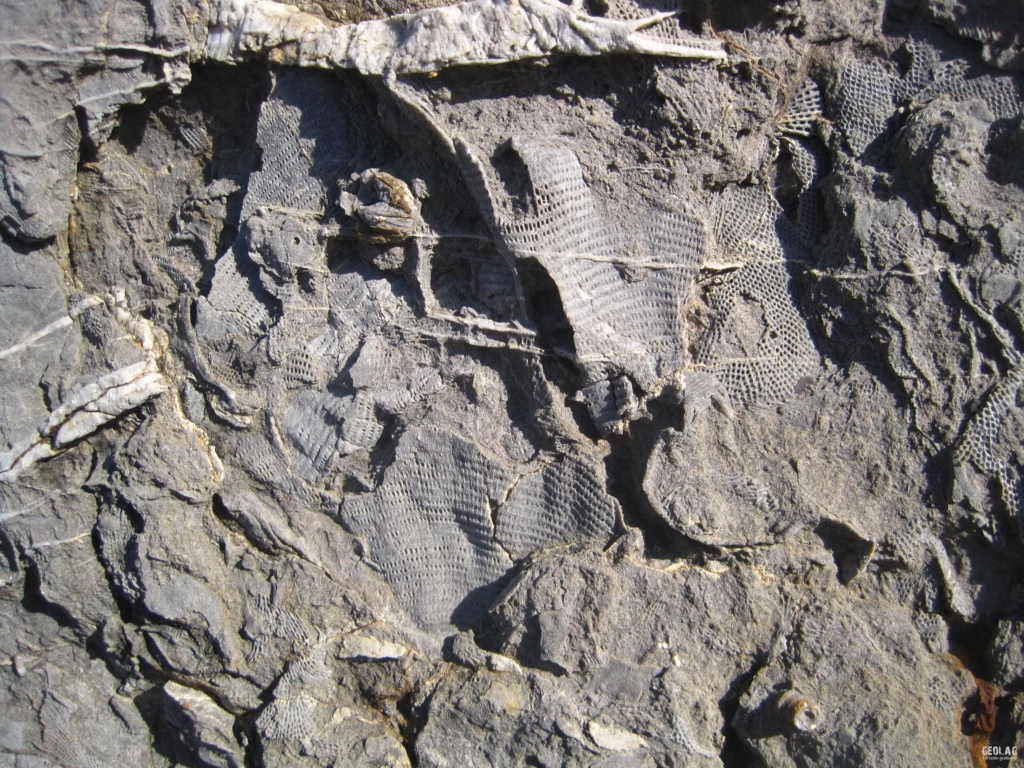
In addition, along the beach—due to the loss of sand during recent storms—magnificent, unique specimens of Carboniferous-era fossilized tree trunks dating back 300 million years have been discovered. A fascinating journey through Earth’s most distant past.
The Arnao Coal Mine: From Coal to Zinc
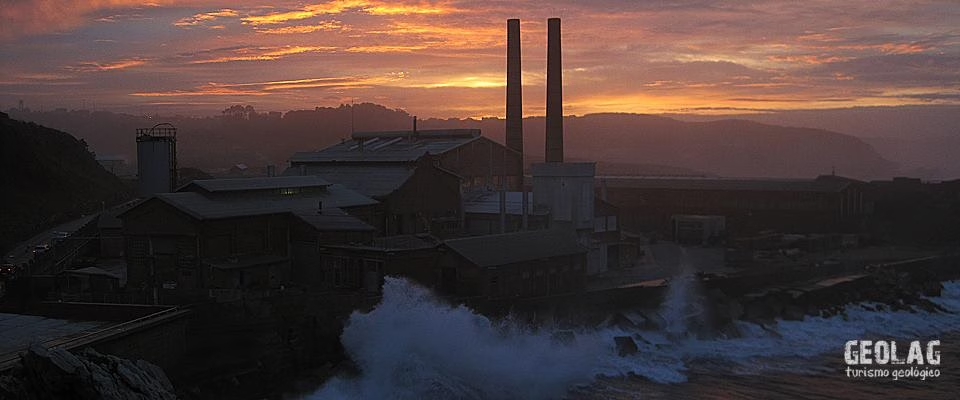
In 1831, a coal deposit was discovered on the Asturian coast—mostly underwater, but highly profitable. In 1833, the Royal Asturian Coal Mining Company was founded, and coal mining began. Since the coal from the Arnao deposit was not suitable for steelmaking, a proposal was made in the mid-19th century to establish a zinc smelter in Arnao to make use of the resource. Between the mine and the zinc factory, some 800 workers were employed, all of whom lived in houses located in the same village. Even today, Asturiana de Zinc—the successor to Asturiana de Minas—uses the factory to produce zinc products.
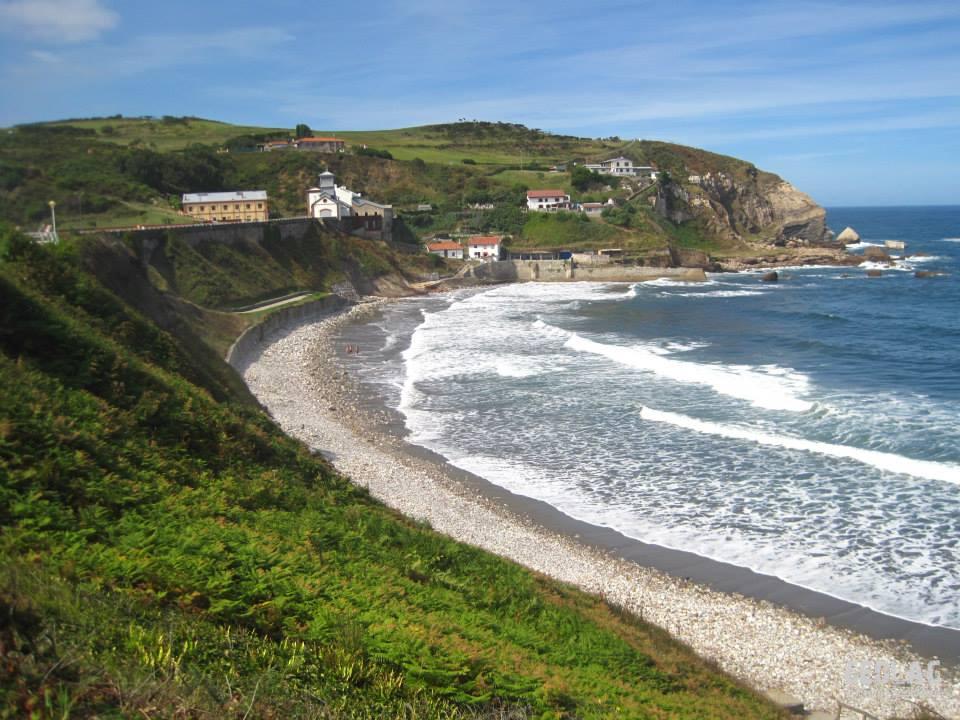 In 1903, seawater began seeping into the mine tunnels due to the miners’ ongoing strikes, which left the tunnels unmaintained; this ultimately forced the mine to close in 1915 following a major flooding of the mine workings.
The Arnao mining and industrial complex, which includes a beautiful zinc-clad mine tower, an engine house, a clubhouse, schools, housing, laboratories, railroad tunnels, and more, is listed in the Inventory of Cultural Heritage of Asturias. All the facilities were transferred to the Castrillón City Council in 2007, and in 2013 they reopened as an interesting museum complex. Together with the well-preserved village of Arnao, designated a Historic Industrial Complex, they aim to become a tourist and cultural attraction.
The Arnao Mining Museum
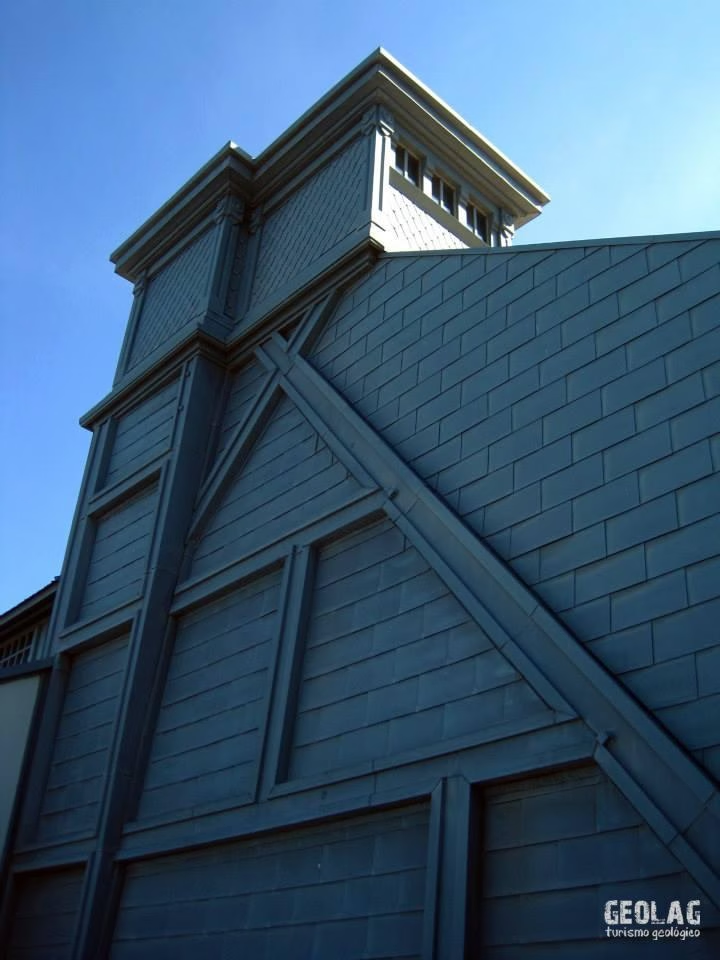
The Arnao Mining Museum takes us inside one of the most significant mining complexes in the Principality of Asturias. Through its permanent exhibition and some 100 m of actual mine tunnels, it allows us to discover some of the unique features of this technological and historical landmark in Spain’s coal mining industry:
- It is Spain’s first coal mine, as evidenced by a document dating from 1591 that was discovered by chance in the archives of the Ministry of Culture. The document is a letter from Friar Agustín Montero to King Philip II asking for his support for the mine’s operation.
- This is the first vertical well drilled in Asturias (1836).
- It is the only underwater mine in Europe. Its tunnels extend beneath the seabed (reaching a depth of about 250 m and extending about 500 m from the coast).
- It is the mine with the oldest headframe in Asturias. The headframe, popularly known as“El Güelo,”is clad in sheet zinc and is the only one of its kind in Spain; its construction is dated to around 1855. This headframe, designated a Site of Cultural Interest (BIC), is the second element of Asturias’ industrial mining heritage to receive the highest level of heritage protection, following the Santa Bárbara mine shaft in Mieres.
- It is the first mine where a woman—and a queen, no less—is known to have entered: Queen Isabella II, who visited Arnao in 1858 and inscribed her initials in a tunnel—now flooded—using the soot from a candle[1].
[1] Queen Elizabeth II’s visit was a historic event for the region and especially for Arnao, as she was asked to use her influence to revive the Royal Zinc Company’s industry. The landscape the Queen traveled through from Avilés to Arnao back then bore no resemblance to what we see today. The journey to the mine was made by a railroad that ran through the dunes of El Espartal (so named for the presence of the esparto grass), where she decided to plant pine trees to stabilize the sand that was constantly washing onto the tracks. Thus, in the 19th century, the bourgeoisie settled along one side of the railroad tracks, which served as a boundary with the beach area. In 1888, “salt baths” became fashionable, and the beach filled with casamatas (beach huts by the sea); thus, Salinas became a recreational area with its famous spa (destroyed by fire in 1915) near which was the San Martín railway tunnel, which runs through Monte de Pinos Altos for more than 600 m and was traversed by Queen Isabella on her trip to the Arnao Mine in 1858. In 1898, a student community settled in Salinas, and it became a commuter town for Avilés. The development boom in the Levante region led to the construction of the towers that characterize Salinas’s skyline; fortunately, this did not prevent the preservation of the valuable and rare dunes of El Espartal.
Would you like to discover this landscape with a geologist?
GEOLAG organises educational routes adapted to families, groups and schools.
Request information about this route