

During the Jurassic period (approximately 150 million years ago), the Earth’s surface was completely different from what we know today. The coast was not cliff-lined as it is now, nor did it have the same W-E orientation it has today. At this time, neither the Cantabrian Mountains nor the reliefs observed today existed.
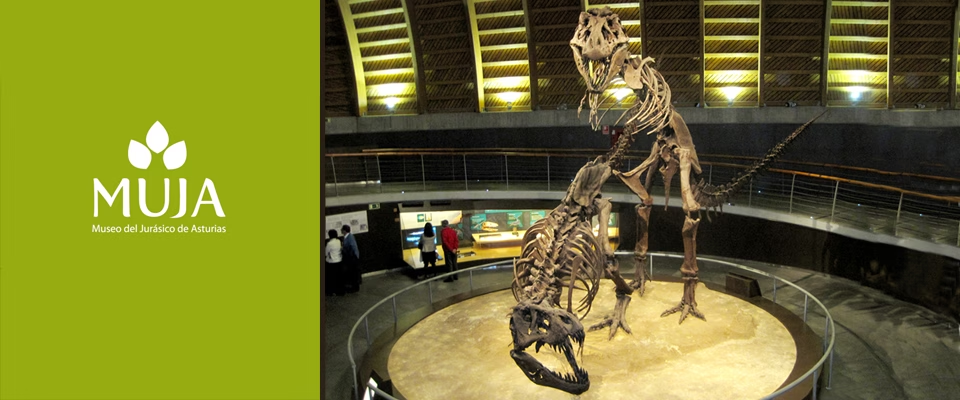
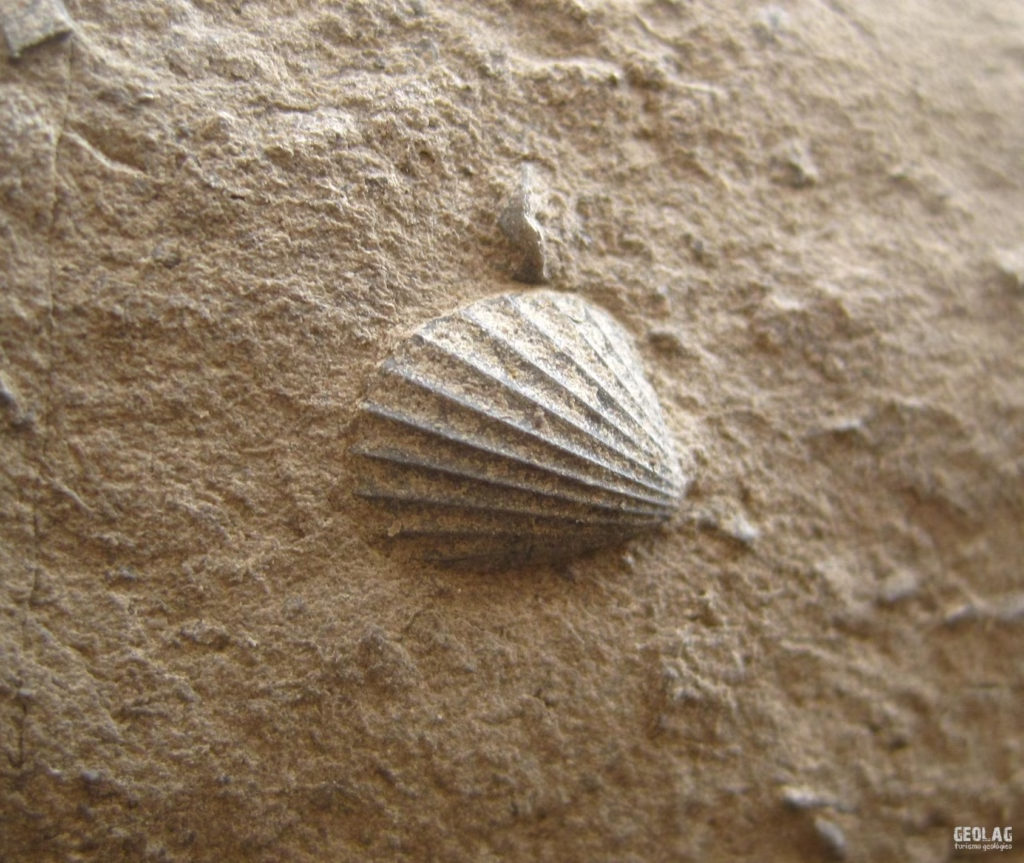
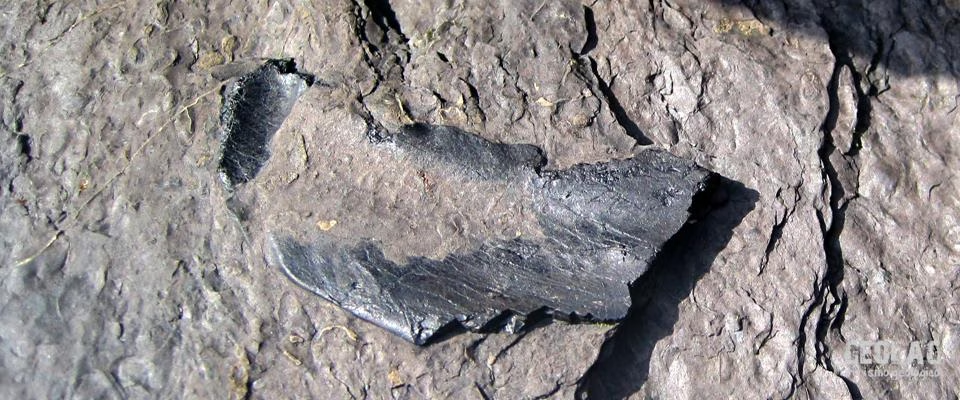
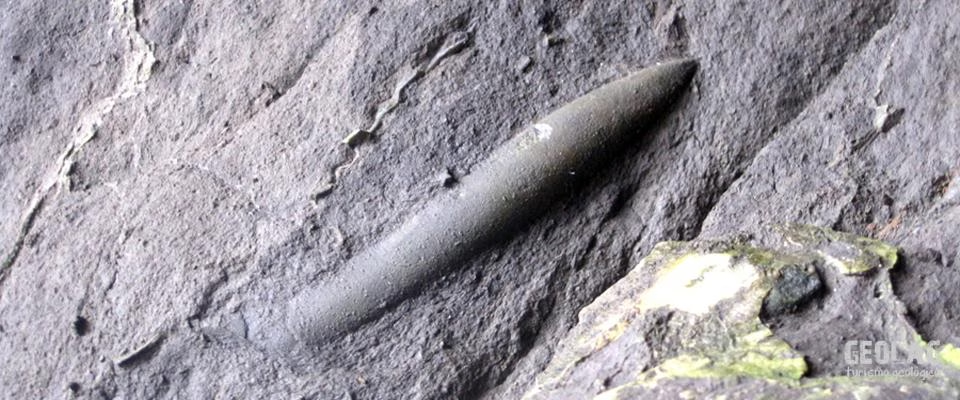
By observing Jurassic rocks, geologists from various specialities (stratigraphy, palaeontology, etc.) have reconstructed the climate, vegetation, and sedimentary environments that occurred over the 60 million years of the Jurassic period.
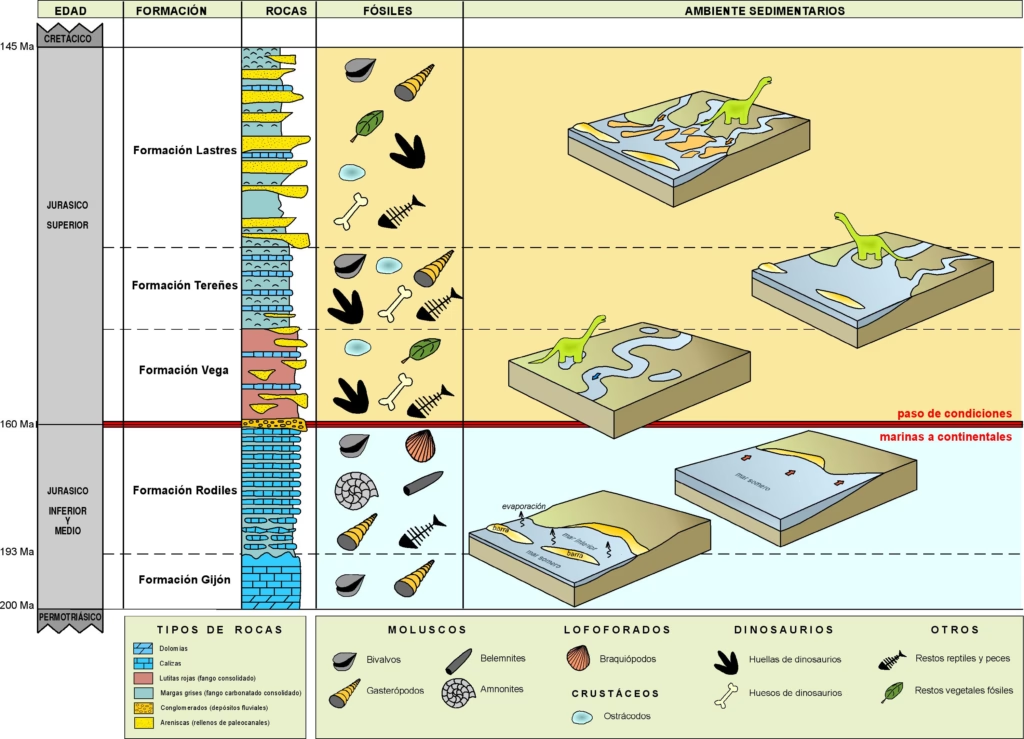
The fossils found in the area, belonging to the earliest moments of Jurassic history, indicate a fauna composed of molluscs, crustaceans, crinoids, and worms. Remains of some marine dinosaurs (ichthyosaurs and plesiosaurs) have also been found. This suggests that at these times, the land we now stand on was below sea level. Subsequently, the area underwent a drastic landscape change as tectonic activity caused the continent to uplift, with the consequent retreat of the sea. This created an irregular relief. The climate was arid, as indicated by the presence of caliches (carbonate soils typical of arid regions) and very verticalised roots, suggesting a very deep water table. This continental uplift produced an abrupt change from marine to continental conditions, with a clear contact between the limestones and the siliceous materials of the continental stage. In these ‘terrestrial’ conditions, the first signs of dinosaurs appeared, such as a multitude of footprints and even vertebrae.
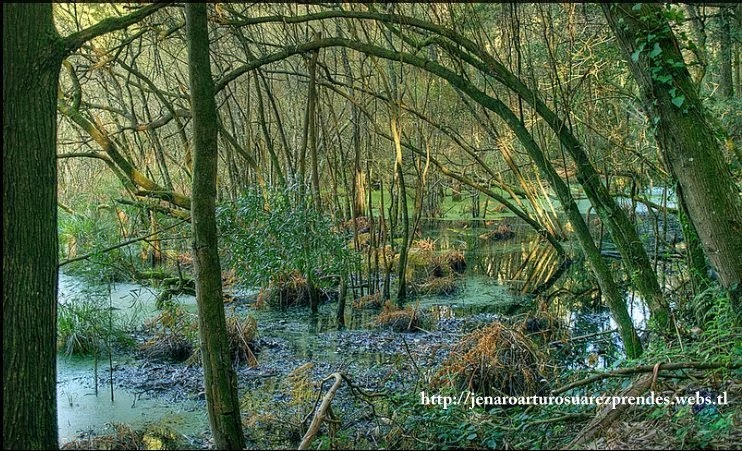
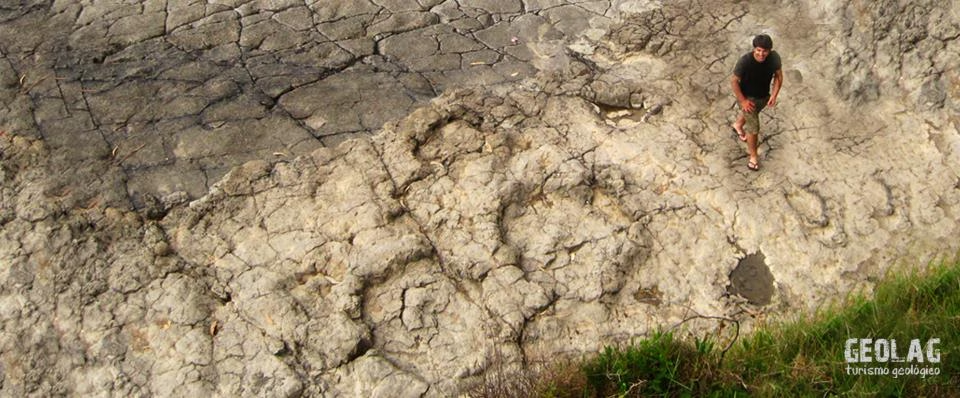
The sea level rose slightly again, causing the inundation of this region, forming a swampy, marsh-like environment where dinosaurs lived, whose remains can be seen along this coastal stretch. Dinosaurs, when moving over muddy or sandy terrain, leave footprints on the ground, called ichnites. To date, nearly 500 footprints and various bone remains of Jurassic reptiles have been recorded in the area, and it is expected that the action of waves on the cliff will continue to uncover new remains in the future.
Asturias boasts the world’s largest dinosaur footprints, as well as the smallest footprint, corresponding to a juvenile quadrupedal dinosaur approximately the size of a modern dog. In addition to footprints of brachiopods, sauropods, theropods, and others, both bipedal and quadrupedal, carnivorous or vegetarian, this privileged part of the peninsular coast has also yielded remains of turtles, crocodiles, and marine reptiles, fish, plants, tree trunks, small organisms, Jurassic wave marks, ancient stream marks, and countless other traces.
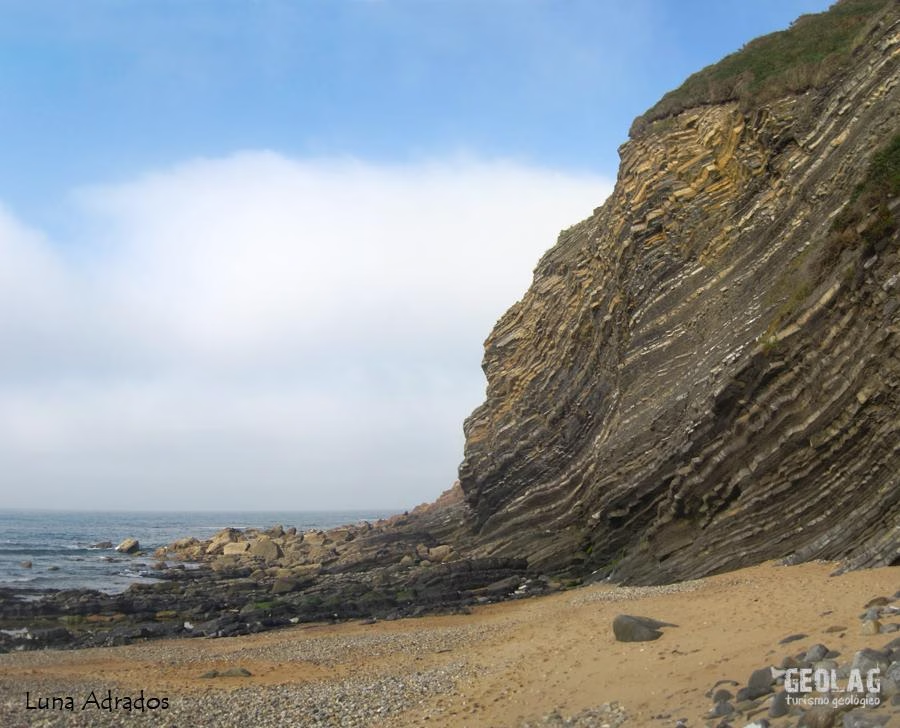
The subsequent tectonic activity linked to the Alpine Orogeny is responsible for the rocks not being in a horizontal position, as they were deposited, but appearing in inclined, sometimes almost vertical, layers. We therefore rule out that these large dinosaurs practiced climbing ;).
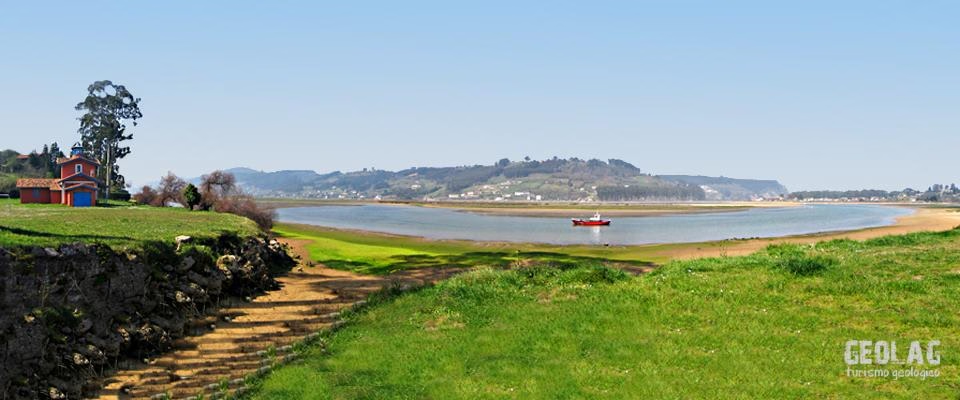
The Asturian Jurassic Coast stretches from Gijón to Ribadesella. Along this coastal stretch, a large number of dinosaur footprints can be observed, in addition to marine fossils and other geological peculiarities. For this reason, we have designed several routes in this area where you can observe the remains of large Jurassic reptiles, as well as other fossils such as ammonites, belemnites… and the areas with the best jet in the world.
- routes to visit the various dinosaur footprint sites on the Asturian coast
- jet route
- villaviciosa estuary route
Do you want to discover this landscape with a geologist?
GEOLAG organises educational routes adapted for families, groups, and educational centres.
Request information about this route